Industrial Transformation Center
The Center for Industrial Transformation (CTP) is an interdisciplinary team of scientists and engineers dedicated to supporting the development of modern industrial technologies. We specialize in accelerating the digital transformation of manufacturing processes through advanced tools, services and digital infrastructure. Our mission is to improve the quality and availability of data, increase the efficiency of analysis, and shorten the path from research results to industrial implementation. We create a secure, scalable environment for data collection, processing and analysis, enabling R&D teams to run artificial intelligence models, test digital twins of manufacturing processes and optimize manufacturing technologies.
It focuses on research and development in areas:
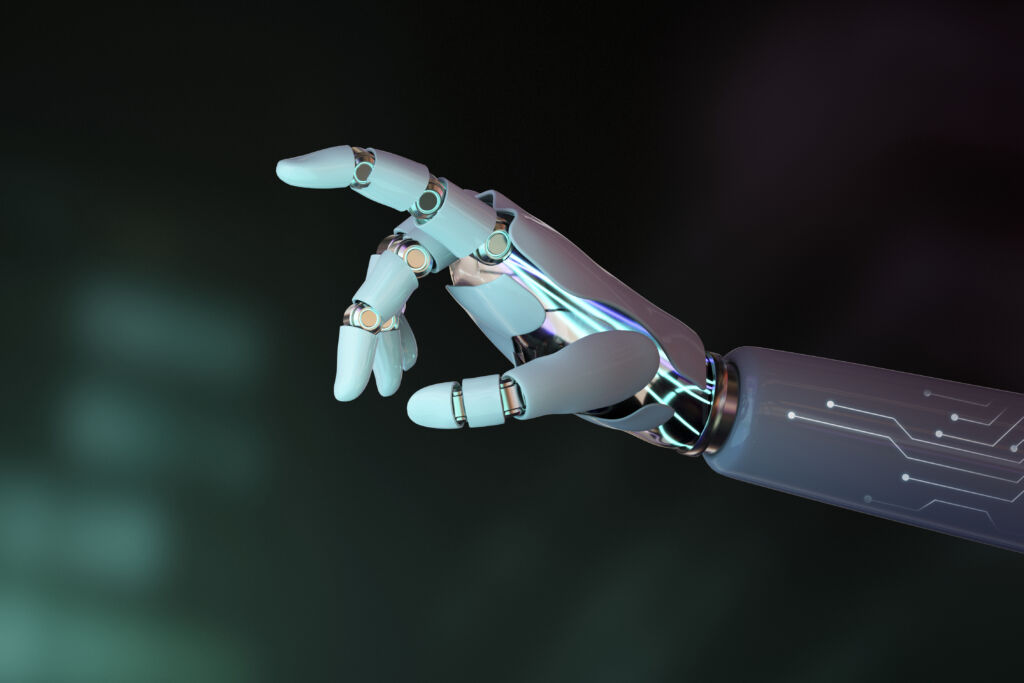
Digital Transformation Area
The Digital Transformation area conducts research and development activities in the design, analysis and implementation of advanced digital technologies for industry, healthcare and the defense sector. Its main interests include the use of data analysis methods, machine learning and artificial intelligence to support decision-making, automation, and improve the reliability and security of technical and information systems.
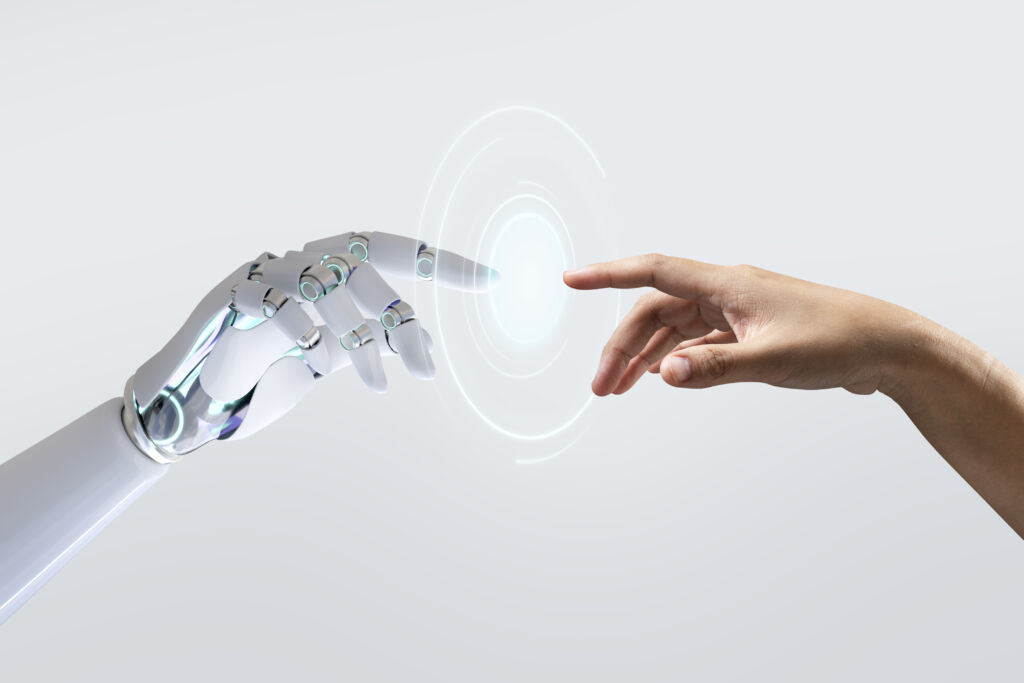
The scope of the area’s activities includes:
- Data processing and signal analysis
We develop advanced methods for analyzing signals and processing data from industrial, medical and IoT sensor systems. We assess data quality for completeness and reliability, and prepare data for statistical analysis and analytical and decision-making applications. In parallel, we integrate, process and manage large data sets (Big Data).
- Application of ML methods
We are developing machine learning and artificial intelligence algorithms, including deep learning models and language models, for predictive and diagnostic purposes. We are researching methods for intelligent analysis of images, signals and time-series data, including interpretable models, for diagnostic and predictive decision support in medical, critical infrastructure and defense systems.
- Digital systems and modeling
We design intelligent systems for monitoring, diagnosis and prediction of object conditions, based on modern distributed and networked architectures, enabling scalable data processing, integration of heterogeneous information sources and near real-time operation. We have experience in creating physiological and biomechanical models that enable personalization of diagnosis and therapy, simulation of the course of a disease, or evaluation of the effects of various treatment scenarios. We are developing methods to create digital twins of processes and technical systems for condition monitoring, failure prediction (predictive maintenance) and optimization of production processes.
The group’s activities include basic and applied research, development of technology demonstrators, and implementation and pilot projects. The work is carried out in close cooperation with industrial partners, public institutions and scientific units. The work is strongly oriented toward the transfer of knowledge and technology to economic and social practice.
Process Transformation Area
The Process Transformation area focuses on research and optimization of advanced manufacturing processes and materials for the foundry, aerospace, automotive and energy industries. We combine incremental and traditional technologies, innovative machining methods and numerical modeling, aiming for more efficient and environmentally friendly processes.
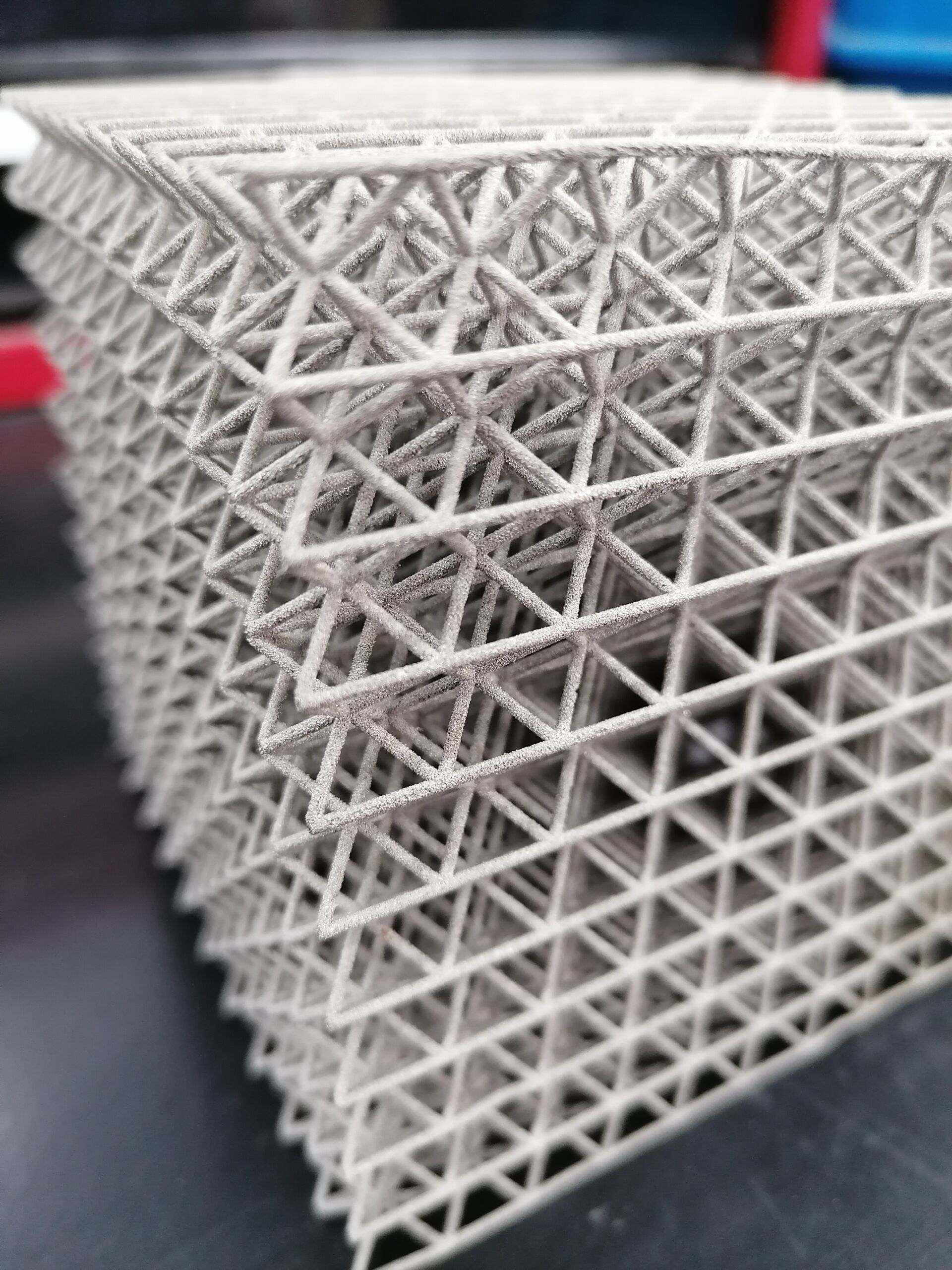
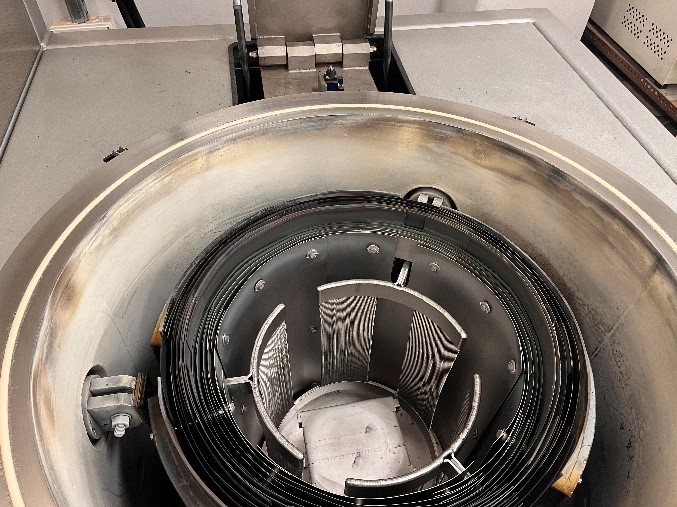
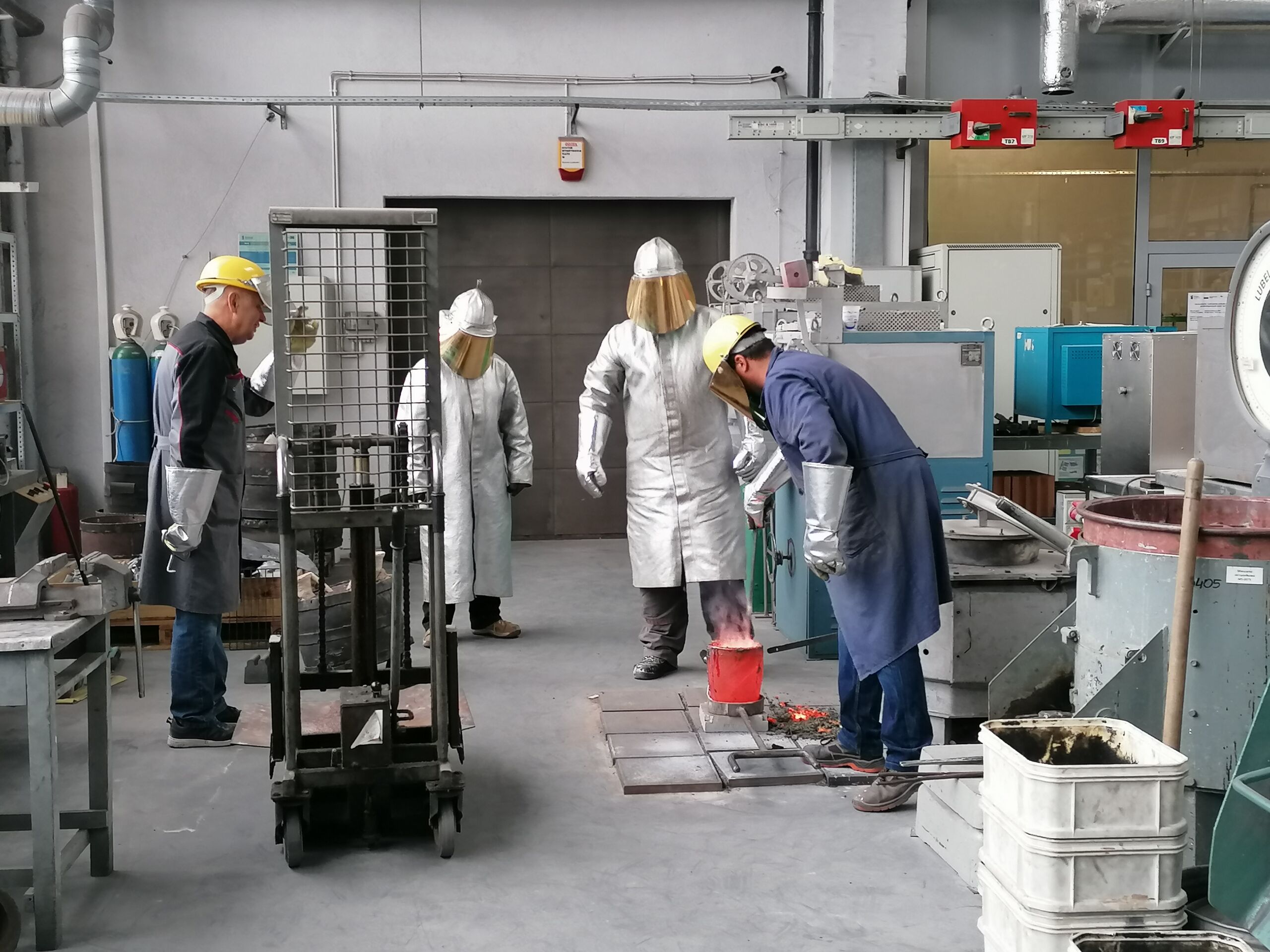
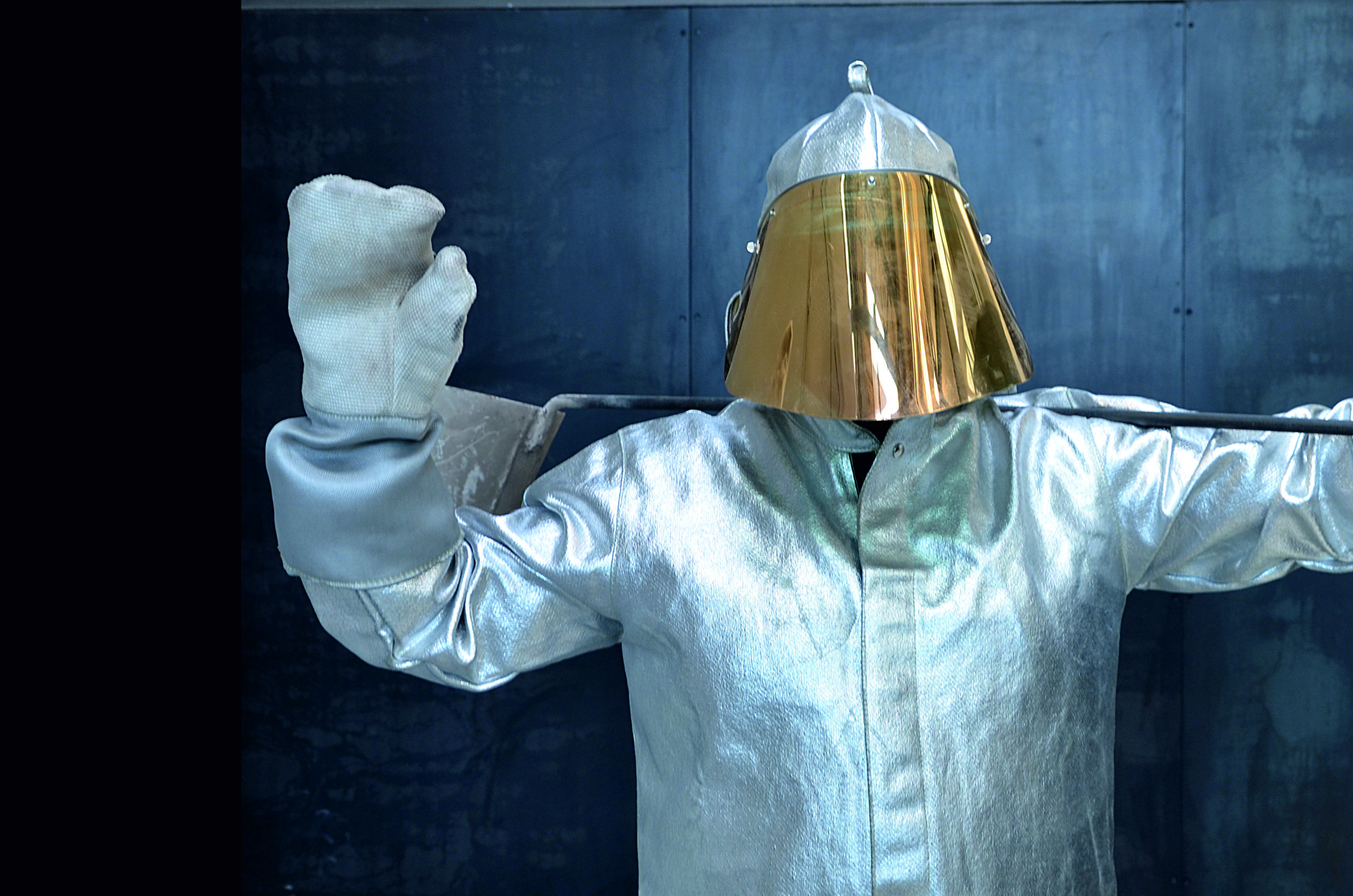
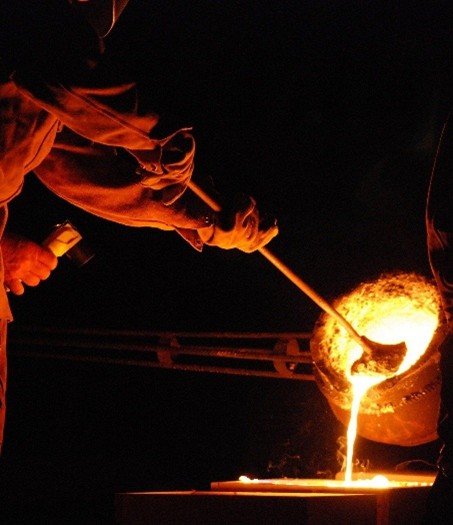
The scope of the area’s activities includes:
Incremental Manufacturing: We optimize 3D printing of metals and ceramics (binder jetting, SLM, DED/LMD) and heat treatment and sintering (HIP). We perform topological optimization of incremental and conventional parts.
Non-contact machining: We are developing electrochemical and plasma methods for smoothing and applying functional coatings (MAOs) to improve durability and performance.
Alloy design: We create state-of-the-art ferrous and non-ferrous alloys, biodegradable alloys for implants, nickel and cobalt superalloys, and high entropy alloys that combine multifunctionality with low carbon and recyclability.
Prototyping of foundry processes: We use simulation (MagmaSoft, Flow3D, ANSYS) to predict defects, optimize process parameters and additive manufacturing processes.
Sustainability: We analyze waste and develop methods to reduce, recycle and automate casting cleaning processes, supporting a closed-loop economy.
Physico-chemical research: We are working on ceramic layer formation mechanisms, innovative molding compounds and technical documentation of castings, combining 3D prototyping with certification standards.
Technology Transformation Area
The Technology Transformation area focuses on the development and implementation of modern engineering solutions to support technological development and industrial automation. We carry out complex projects from concept to finished product – we design mechanical and mechatronic structures, integrate sensor systems and actuators, and develop control systems. We use advanced analytical methods (FEA simulations, CFD, Multiphysics), additive technologies and reverse engineering, which enables rapid proof of concept and implementation of innovative prototypes. Expert knowledge of advanced numerical systems allows us to optimize designs and manufacturing processes, taking into account coupled multiphysics, fast-variable dynamics and fluid flows.
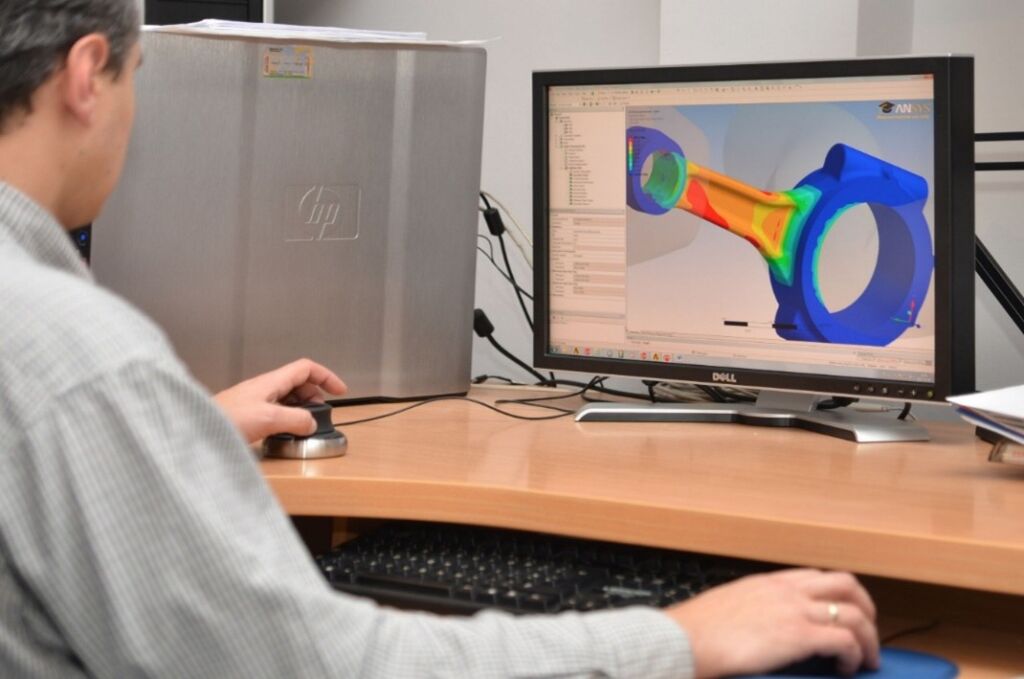
The scope of the area’s activities includes:
Device design and prototyping: We create mechanical and mechatronic solutions – from conceptual analysis, to detailed CAD design, to making functional models. The team also works on integrating drives, actuators, and sensors with new control systems to realize complex machines and industrial workstations.
Structural analyses and numerical simulations: We perform finite element strength analyses (FEA), flow simulations (CFD) and coupled thermal-mechanical analyses. We use topological optimization to shape component structures according to given boundary conditions. We evaluate the dynamic parameters of machines, verify fatigue life and predict the effect of operating conditions on structural safety.
Material modeling and composites: We develop models for new materials, including composite alloys and layered materials. We analyze the mechanical and physicochemical properties of composites, allowing them to be used in lightweight, high-strength structures and in applications requiring resistance to extreme conditions.
Life cycle assessment (LCA) and carbon footprint: We conduct life cycle assessments (LCA) and carbon footprint analysis of designed technology solutions, including fuel cells and energy systems. In this way, we support sustainability by identifying opportunities to reduce CO₂ emissions and material intensity from the design stage.
Rapid prototyping and reverse engineering: We use 3D printing technologies to rapidly prototype mechanical components and casting molds and tools. We use 3D scanners and reverse engineering to digitize existing components so they can be modified and integrated into new designs.
Functional tests and implementations: We prepare comprehensive tests of equipment prototypes – we verify the operation of mechatronic systems, check the functionality of control systems and optimize machine parameters. We tailor our solutions to the needs of the industrial customer, ensuring that the technology is ready for rapid implementation in production conditions.
The Technology Transformation area provides comprehensive engineering expertise, combining competencies in design, automation, materials science and numerical analysis. As a result, CTP offers comprehensive technical support to industry in the processes of modernization, automation and development of new production equipment.
CONTACT
Director of the Center for Industry Transformation
PhD Sc. Eng. Tadeusz Topór-Kamiński
e-mail: tadeusz.topor-kaminski@kit.lukasiewicz.gov.pl
tel. +48 32 271 60 13 ext. 146